

?This message is shared through UNHCR’s WhatsApp communication?
UNHCR’s National Call Center will close at 12:00 PM on Wednesday 31 December and will be closed on Thursday 1 January for New Year.
December 30, 2025
?This message is shared through UNHCR’s WhatsApp communication?
UNHCR’s National Call Center will close at 12:00 PM on Wednesday 31 December and will be closed on Thursday 1 January for New Year.
December 29, 2025
?This message is shared through UNHCR’s WhatsApp communication?
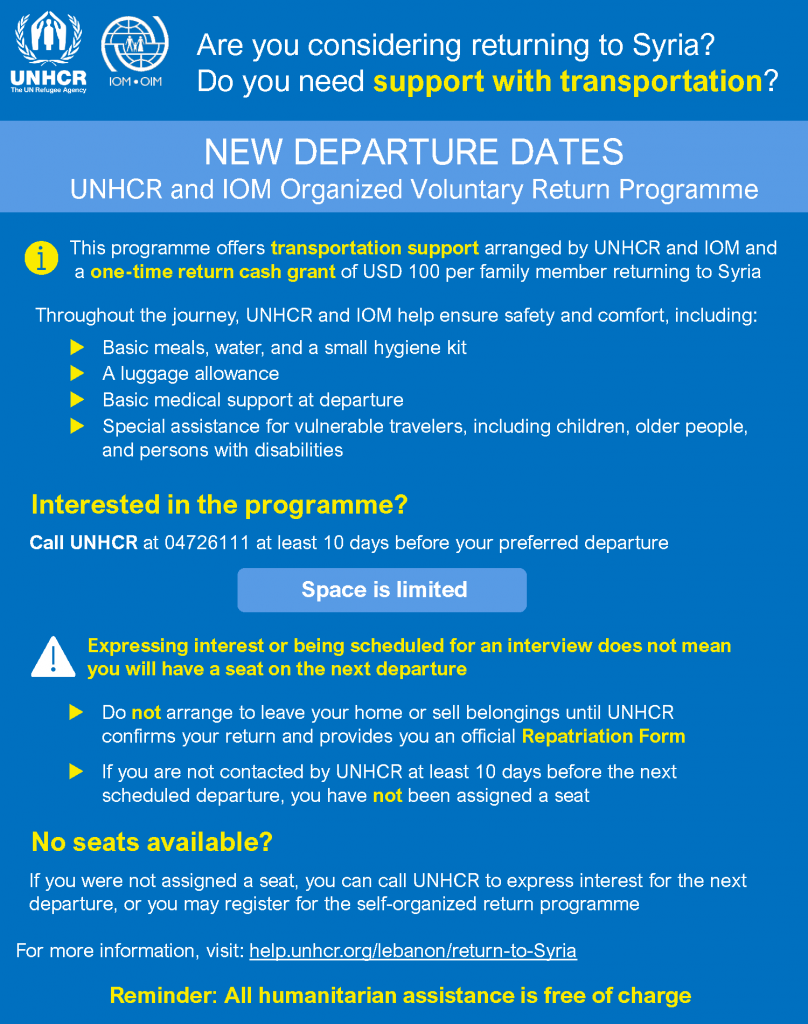
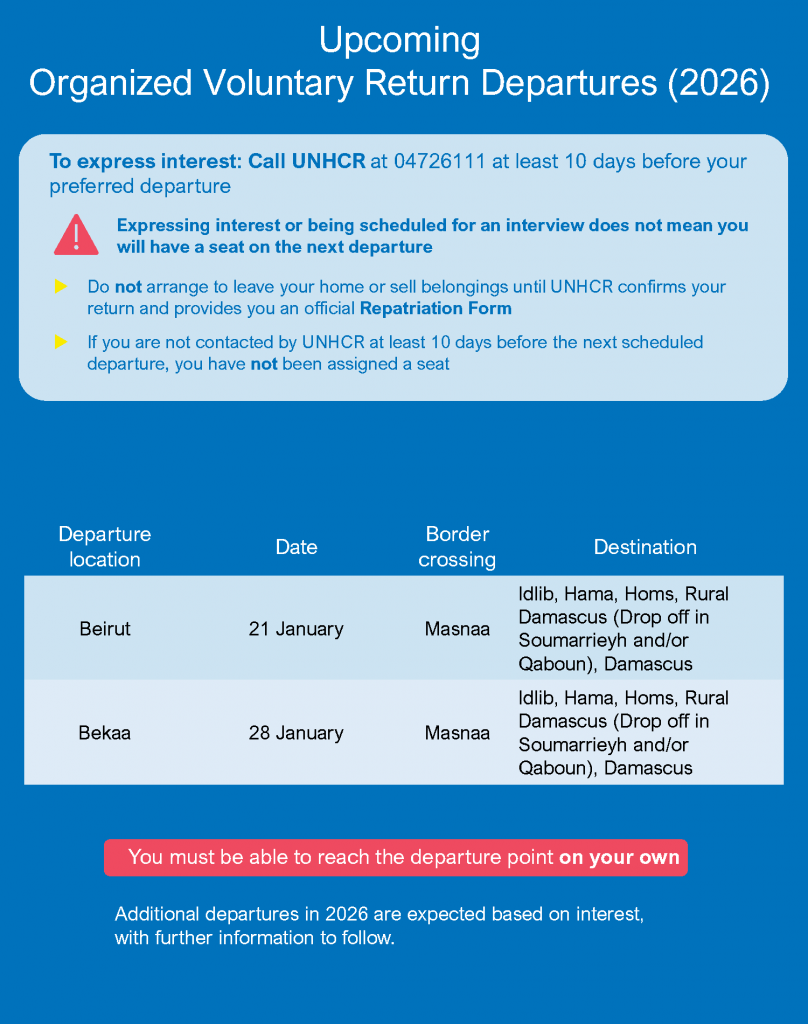
The Government of Lebanon has extended its facilitation measures for Syrians and Palestinian refugees from Syria wishing to depart through land border crossing points until 31 March 2026. This programme offers transportation support arranged by UNHCR and IOM and a one-time return cash grant of USD 100 per family member returning to Syria.
Dates:
To register interest: Call by 9 January
Interested?
December 23, 2025
?This message is shared through UNHCR’s WhatsApp communication?
UNHCR’s National Call Center will close at 12:00 PM on Wednesday 24 December and will be closed on Thursday 25 December for Christmas.
We remind that all UNHCR WhatsApp messages can be found on HELP Lebanon.
December 9, 2025
?This message is shared through UNHCR’s WhatsApp communication?
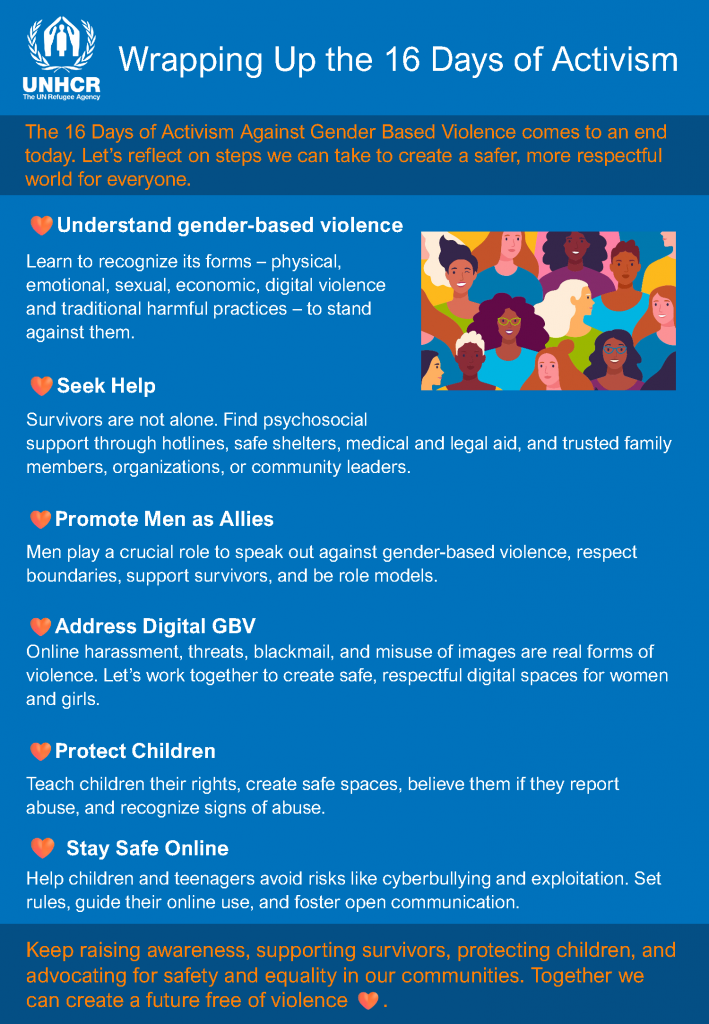
The 16 Days of Activism Against Gender-Based Violence ends today—but our commitment continues. Let’s keep raising awareness, supporting survivors, protecting children, and standing against all forms of violence, including digital violence and online exploitation.
Together, we can create safer homes, communities, and digital spaces for everyone. ?
December 9, 2025
?This message is shared through UNHCR’s WhatsApp communication?
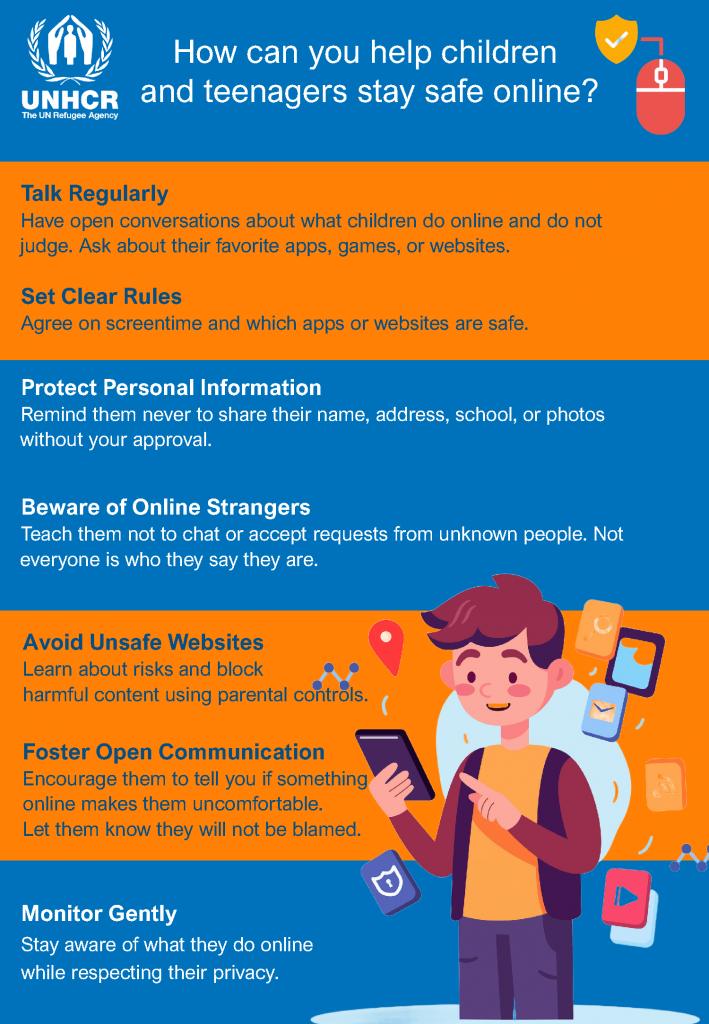
The internet offers many opportunities for learning and connection, but it also has risks. Children and teenagers need to know how to stay safe and protect themselves from online dangers, including predators, cyber bullies, and inappropriate content.
With guidance and open conversations, parents and caregivers can help young people use the internet safely and confidently.
Let’s protect their right to grow and thrive in a kind and respectful environment. ?
December 8, 2025
?This message is shared through UNHCR’s WhatsApp communication?
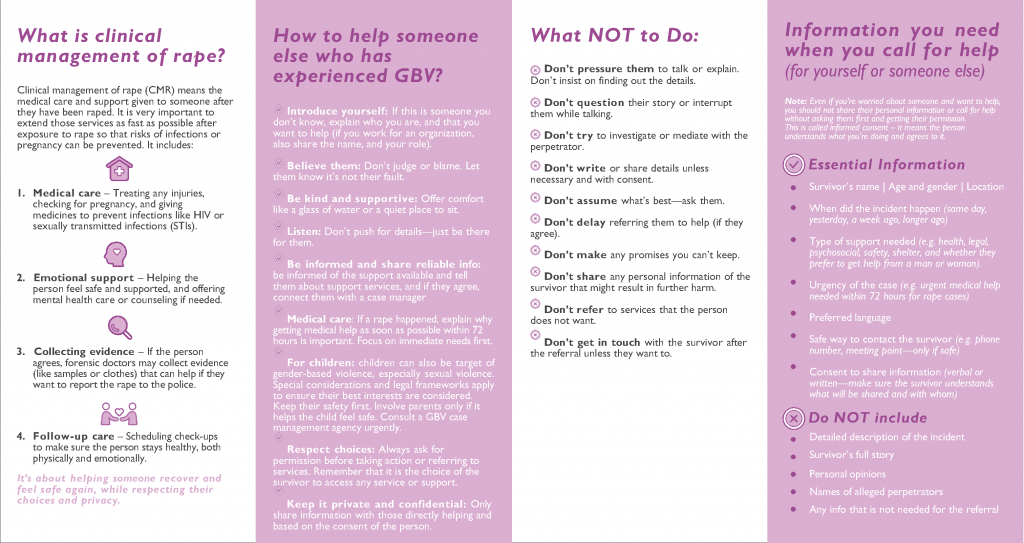
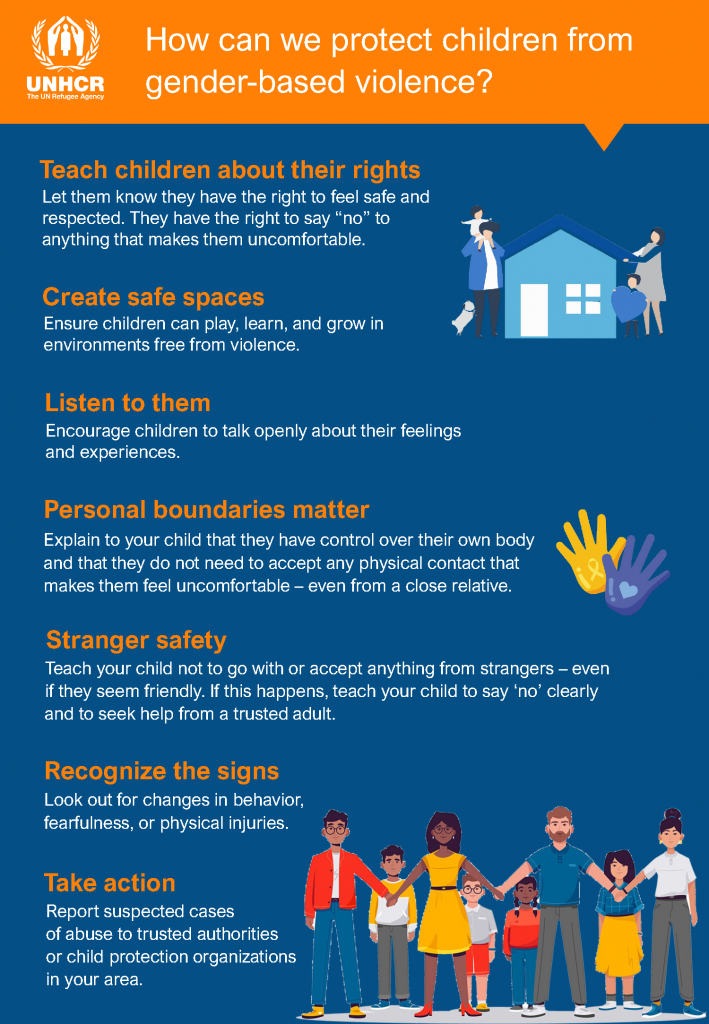
Every child has the right to a safe and happy childhood. Gender-Based Violence doesn’t just affect adults— children can also experience emotional, physical, or sexual harm, often from people they know or trust.Violence against children includes:
By talking openly about children’s safety, we can help families recognize risks early and make sure every child receives care, respect, and protection.
If you are worried about a child’s safety, support is available. UNHCR and partners provide confidential assistance, safe spaces, and guidance for families.
For information on available services and assistance for children, visit: help.unhcr.org/lebanon/protecting-child
December 4, 2025
?This message is shared through UNHCR’s WhatsApp communication?
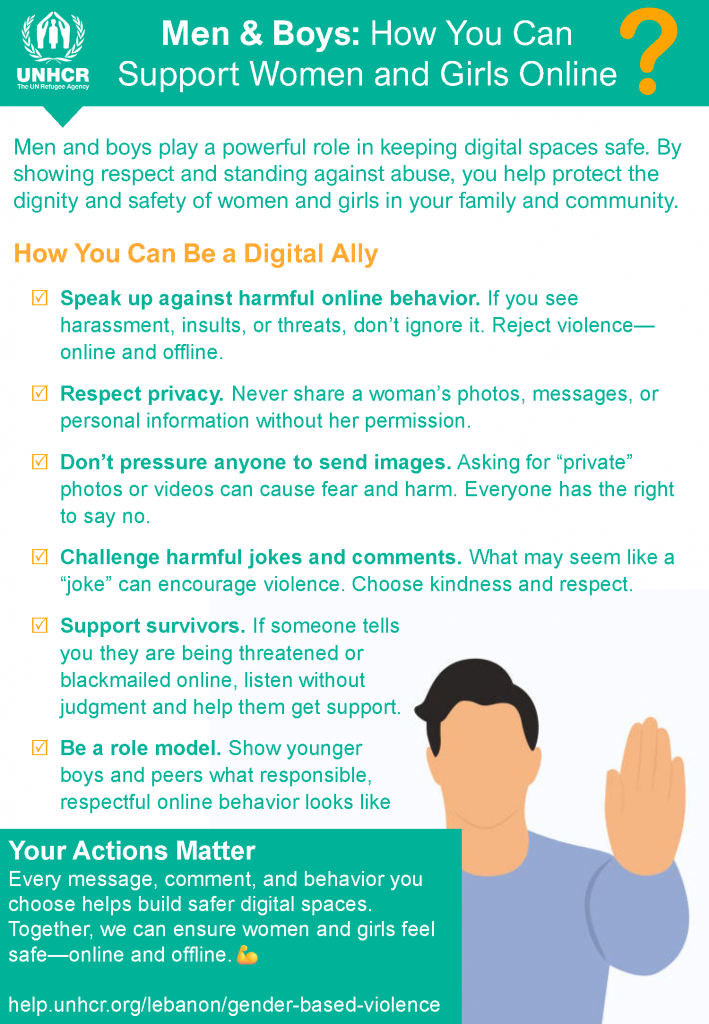
Online spaces should be places of learning and connection—not harm. But many women and girls face online harassment, pressure to send photos, blackmail, and other forms of digital violence. Men and boys have an important role in stopping this.
You can be a digital ally by speaking up against harmful behavior, respecting women’s privacy, and supporting anyone facing online abuse.
Together, we can create safer, kinder digital spaces for everyone.
For support and information:
help.unhcr.org/lebanon/gender-based-violence
December 2, 2025
?This message is shared through UNHCR’s WhatsApp communication?
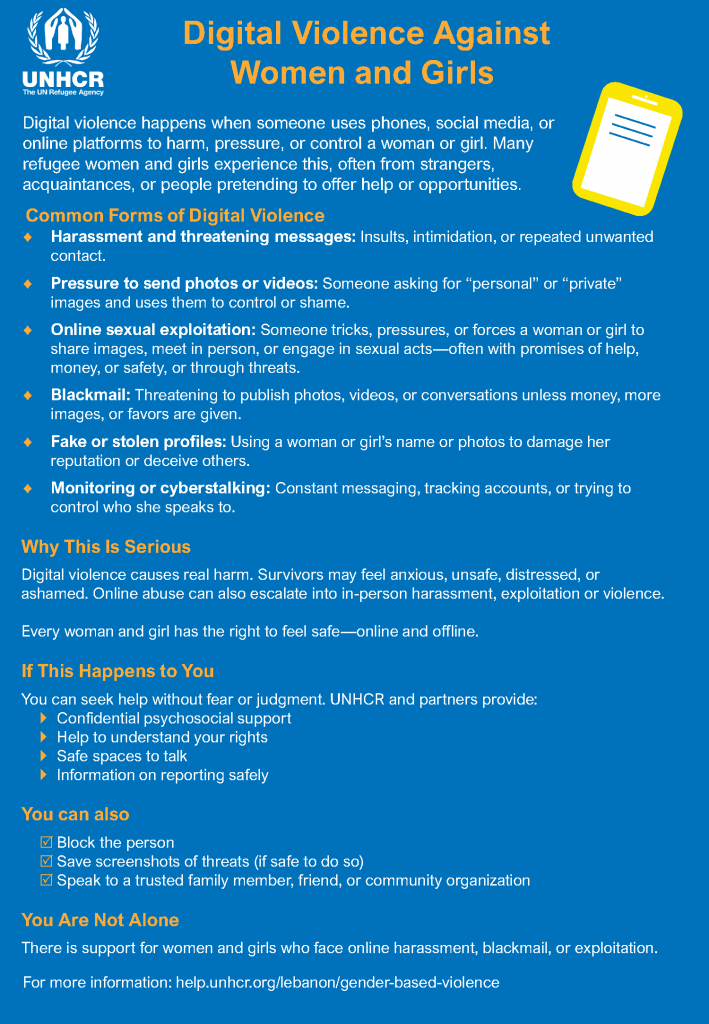
Digital violence is real—and it affects many women and girls, including refugees.
Women and girls are sometimes pressured online, threatened, or asked for photos or videos. Some face blackmail or sexual exploitation on social media, messaging apps, or online platforms. These acts cause fear and harm, but you are not alone, and help is available.
If you experience digital violence, you have the right to seek support. UNHCR and partners offer confidential psychosocial support, legal information, and safe spaces.
Learn more:
help.unhcr.org/lebanon/gender-based-violence
? Together, we can make digital spaces safer for women and girls.
December 1, 2025
?This message is shared through UNHCR’s WhatsApp communication?
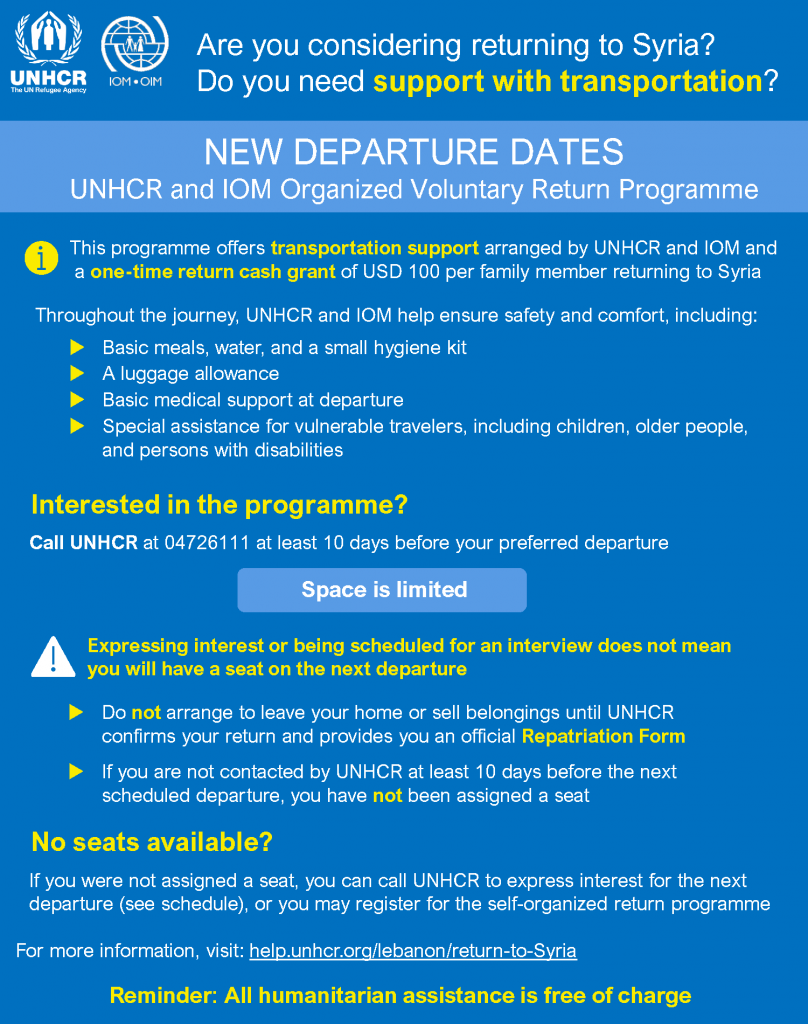
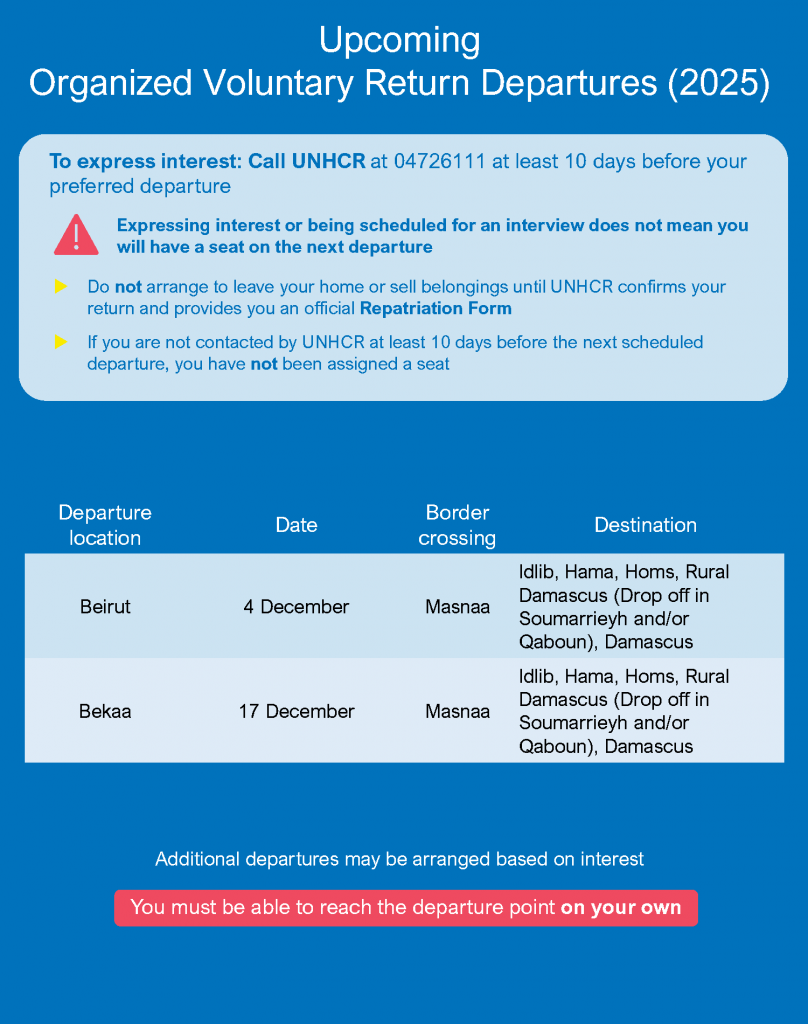
Reminder for the final organized return movement of 2025. This is your last chance to sign up for the 17 December movement from Bekaa.
To travel on UNHCR and IOM’s Organized Voluntary Return Programme: see the schedule of upcoming departures. This programme offers transportation support arranged by UNHCR and IOM and a one-time return cash grant of USD 100 per family member returning to Syria.
Interested?
November 27, 2025
?This message is shared through UNHCR’s WhatsApp communication?
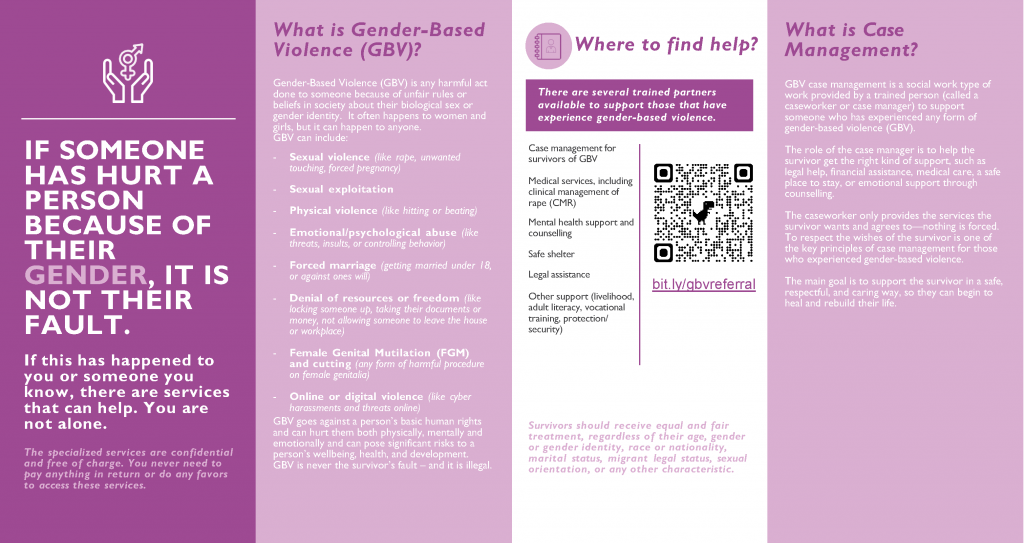
Gender-based violence refers to harmful acts against a person based on their gender and the roles of women and men in society. This can be forcing another person to do something against their will through violence, coercion, threats, deception, cultural expectations, or economic means. It can happen to anyone, but women and girls are most affected.
Gender-based violence is not an individual problem—it affects families and communities too.
Where can you seek help?
If you or someone you know is experiencing gender-based violence, remember it is your right to get help. UNHCR through its partners provides psychosocial support and counselling, safe shelters, legal support, and other assistance. To get help:
Getting help is a brave and important step. Together, we can stand against violence and support survivors ?