?This message is shared through UNHCR’s WhatsApp communication?
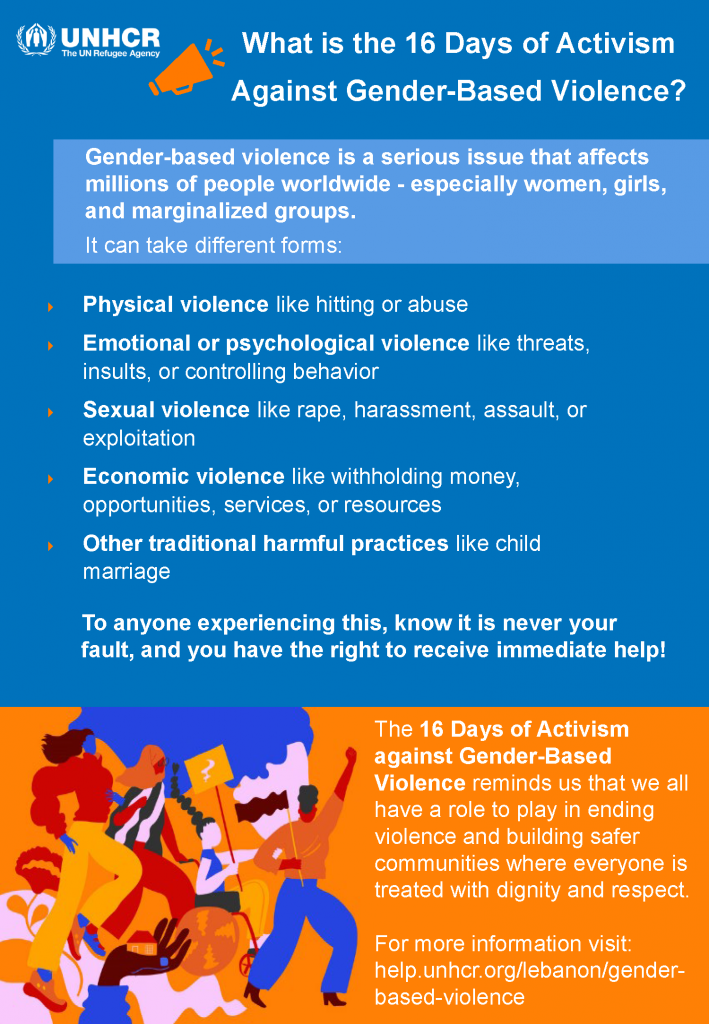
Gender based violence refers to harmful acts against a person based on their gender and the roles of women and men in society. This can be forcing another person to do something against their will through violence, coercion, threats, deception, cultural expectations, or economic means. It can happen to anyone, but women and girls are most affected.
Gender-based violence is not an individual problem – it affects families and communities too.
Where can you seek help?
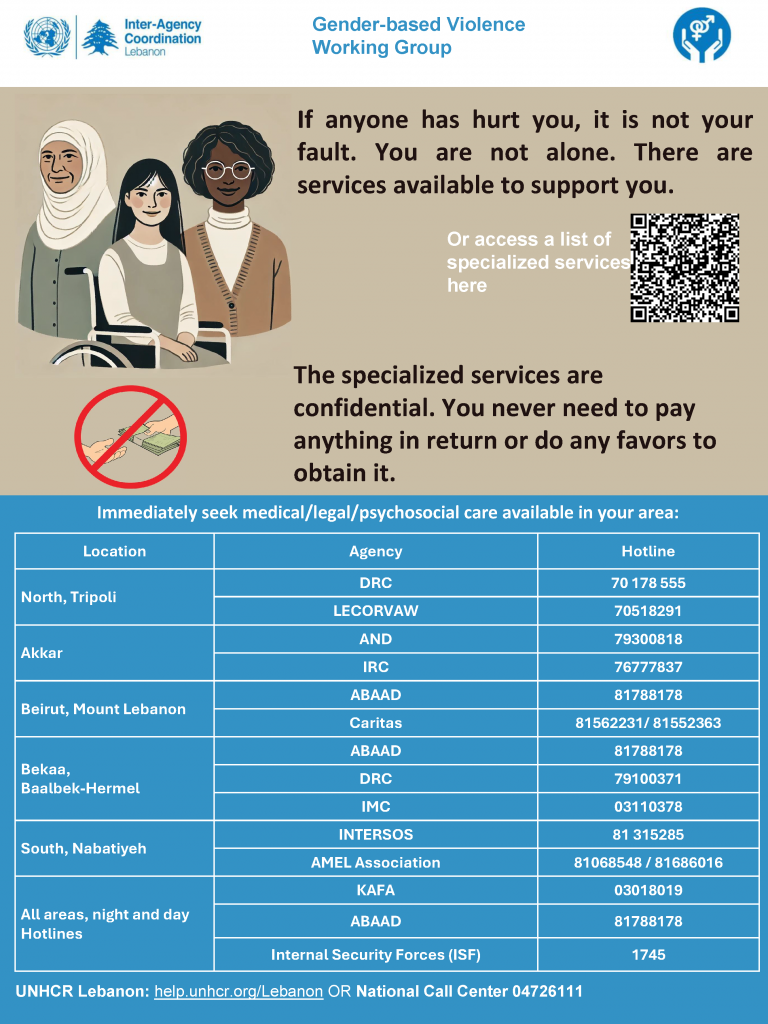
If you or someone you know is experiencing gender-based violence, remember it is your right to get help. UNHCR through its partners provides psychosocial support and counselling, safe shelters, legal support, and other assistance. To get help:
Call local support hotlines
Visit nearby safe spaces or service centers
Reach out to a trusted family member, organization, or community leader for guidance
Getting help is a brave and important step. Together, we can stand against violence and support survivors. ?
?This message is shared through UNHCR’s WhatsApp communication?
Every year we mark 16 Days of Activism against Gender-Based Violence—a global campaign that runs from the International Day for the Elimination of Violence Against Women (25 November) until Human Rights Day (10 December). It reminds us that violence against women and girls is a human rights issue.
In times of crisis, gender-based violence increases, but by talking about it we can:
Raise awareness on what it looks like
Help survivors know they are not alone and support them to access services
?This message is shared through UNHCR’s WhatsApp communication?
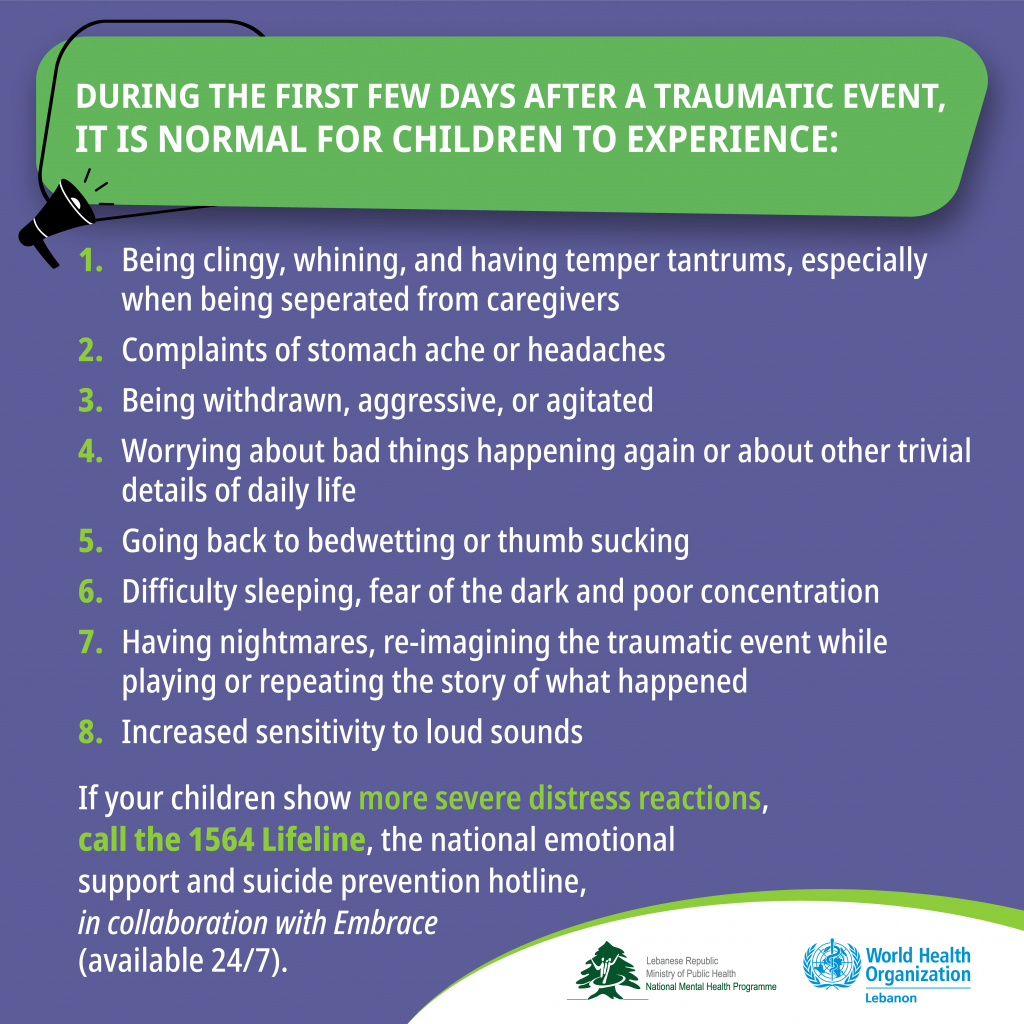
When exposed to a traumatic event and during times of instability, children may exhibit signs of stress that are important to recognize. These are some signs that parents and caregivers should pay attention to.
Let your child know it is okay to feel scared, confused, or sad about events they are witnessing. Offer empathy and understanding.
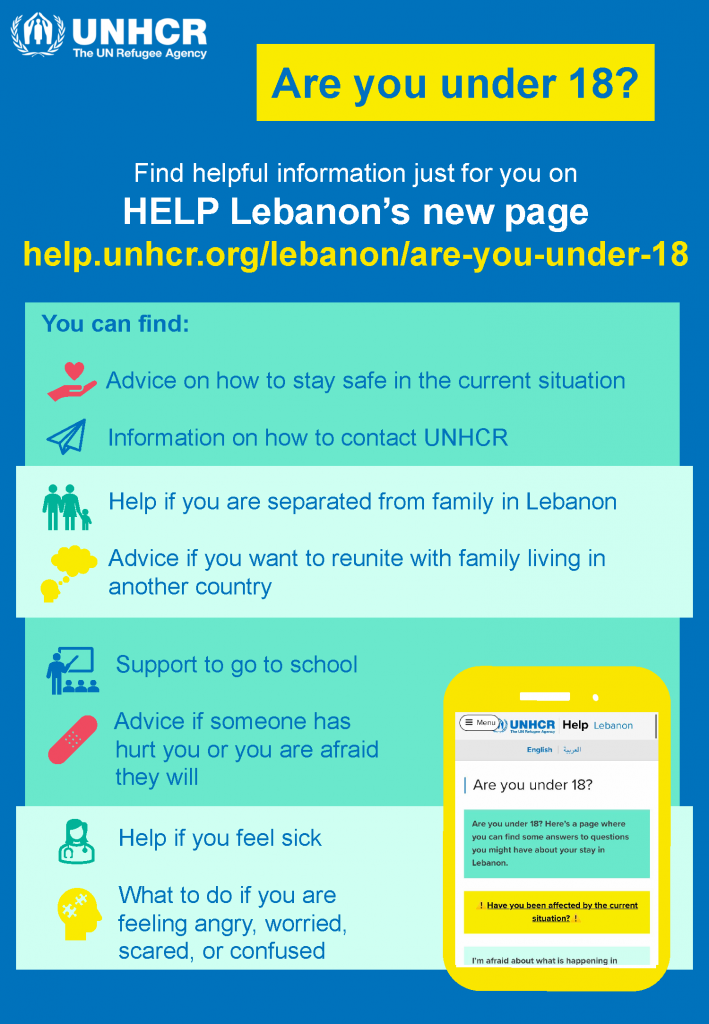
Remember: You are not alone. UNHCR and partners are here to support you and your family through available services during these tough times. Find information on services on HELP Lebanon: help.unhcr.org/Lebanon
?This message is shared through UNHCR’s WhatsApp communication?
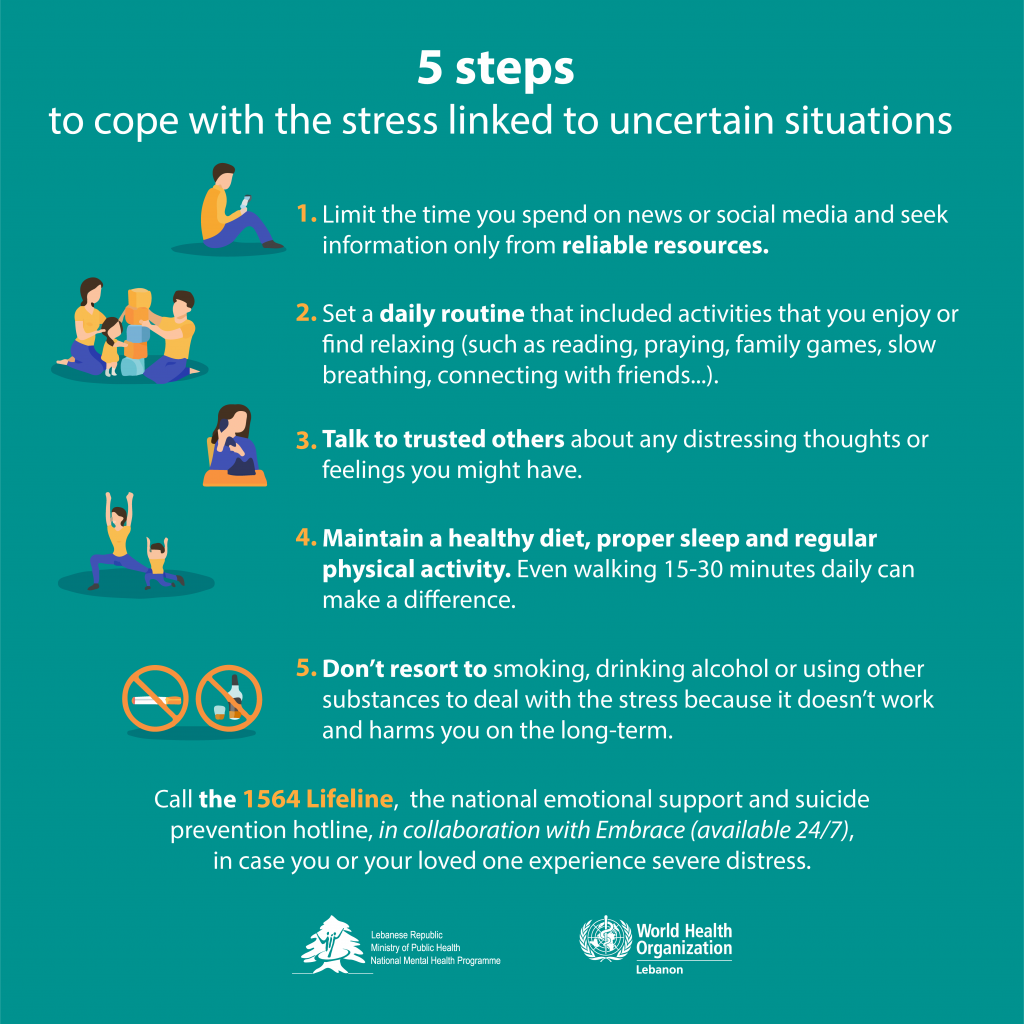
5 Steps to cope with the stress linked to uncertain situations:
The current situation in Lebanon is extremely difficult and has a great impact on our mental health. While we cannot control what happens around us, we can take simple steps to reduce stress and anxiety. Here are some tips to support you and your loved ones cope in times of crisis.
Remember: You are not alone. UNHCR and partners are here to support you and your family through available services during these tough times. Find information on services on HELP Lebanon: help.unhcr.org/lebanon
This message is shared through UNHCR’s WhatsApp communication
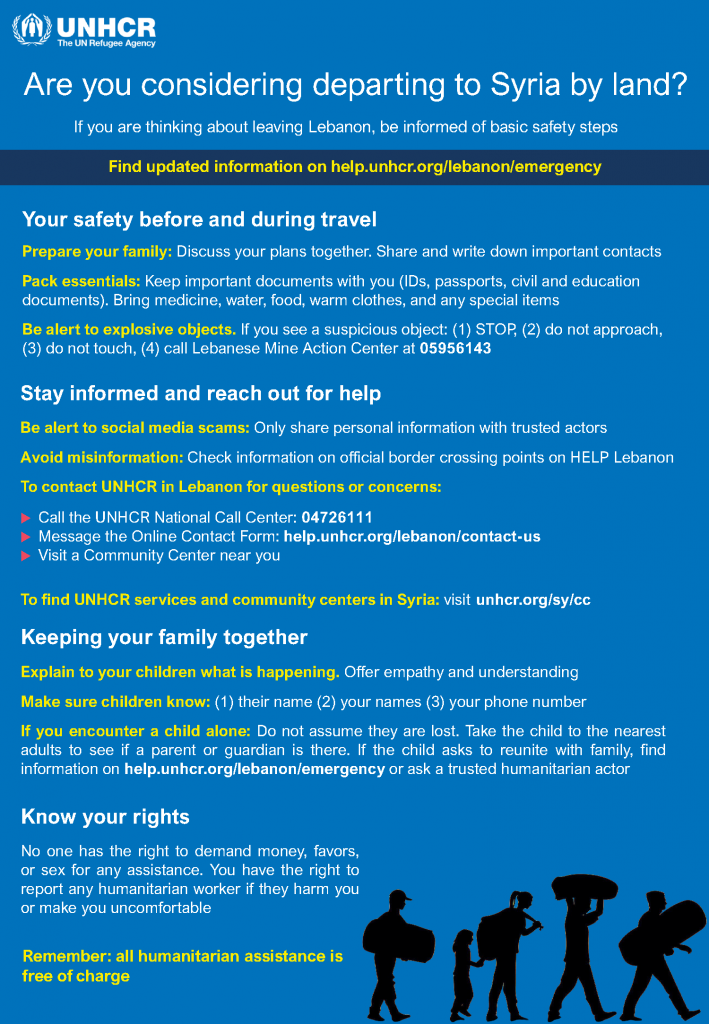
If you are thinking about leaving Lebanon, here are some safety recommendations to consider before and during travel, including important contacts and what to do in case of family separation.
Find UNHCR services and community centers in Syria at: unhcr.org/sy/cc
?This message is shared through UNHCR’s WhatsApp communication?
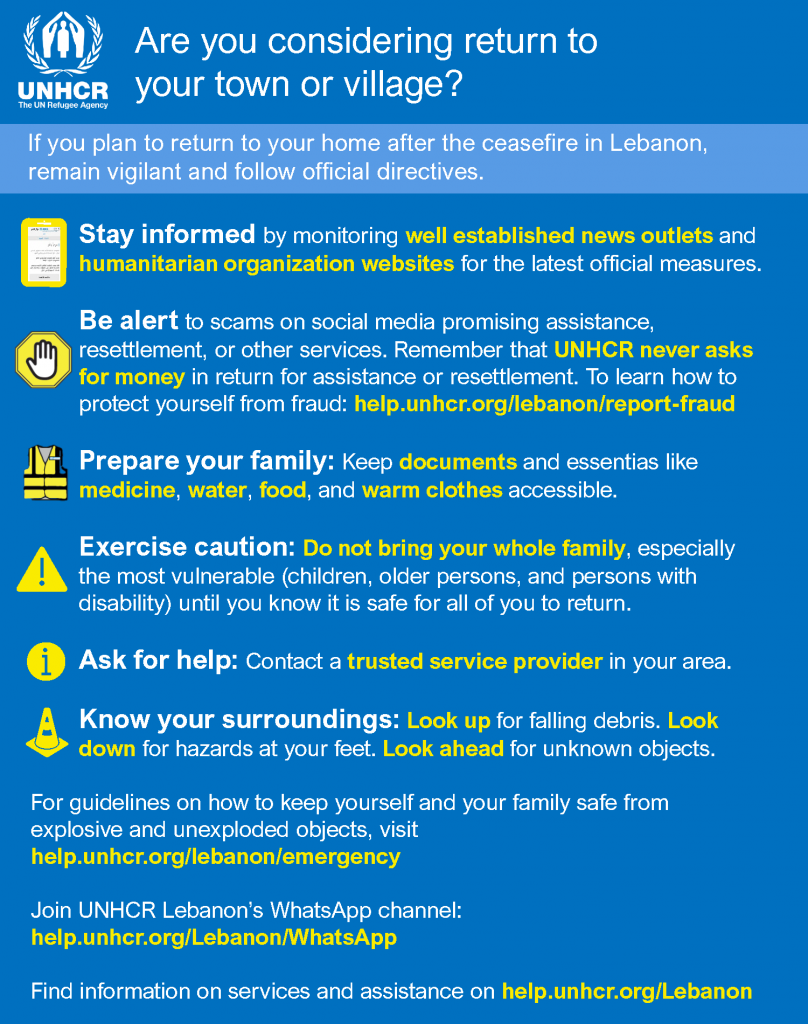
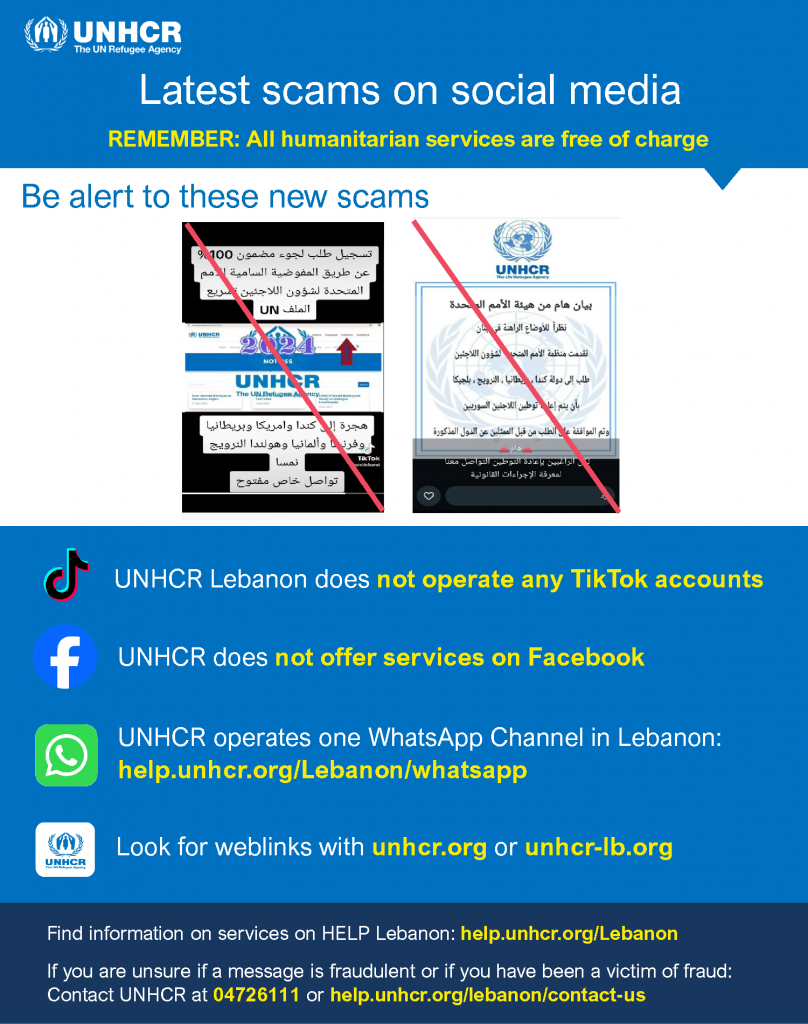
Be alert to recently identified resettlement scams on social media.
Please note that UNHCR never asks for money in return for resettlement.
To learn how to protect yourself from fraud, how to report fraud, and the consequences of fraud, watch this video and visit HELP Lebanon: Report Fraud.